Moving Past the Static Bench into Defensive Handling
Traditional target practice teaches the basic fundamentals of sight alignment, trigger squeeze, and stance from a fixed position, but defensive weapon handling requires an entirely different operational mindset. Practical self-defense training forces shooters to manage weapon presentation from concealment, clear mechanical malfunctions under time constraints, and solve dynamic problems while assessing real-world surroundings. At this level, accuracy remains non-negotiable, but marksmanship must be executed alongside movement, spatial awareness, and deliberate decision-making.
When shooters step into tactical firearms training, instructors strip away the comfort of bench rests and paper bulls-eyes at leisurely intervals. Defensive encounters happen quickly, at close distances, and under high neurological stress, meaning muscle memory and automaticity dictate outcomes far more than deliberate sight alignment. Training environments emphasize economy of motion, ensuring that drawing the pistol, presenting the frame, establishing index points, and breaking shots occur seamlessly without visual hunting or wasted movement.
A structured curriculum generally progresses from basic weapons safety to intermediate manipulation, eventually incorporating lateral movement, shooting around barricades, and rapid threat identification. Students exploring dedicated shooting ranges with classes and training quickly learn that handling recoil during rapid strings of fire requires a more aggressive, forward-driving stance than typical target shooting. The primary goal is developing subconscious competence, freeing conscious mental bandwidth to evaluate immediate safety threats, bystander locations, and physical avenues of retreat.
Facility Dynamics and Finding a Tactical Shooting Range
Not every firing line accommodates dynamic weapon manipulation, which makes finding the right facility an essential first step for serious skill development. A dedicated tactical shooting range differs substantially from standard recreational facilities, primarily through the use of drive-through target bays, variable-distance action pits, and ballistic rubber shoot-houses. These setups allow participants to engage targets at three hundred and sixty degrees, run movement drills, and work around vehicles or simulated architectural doorways safely.
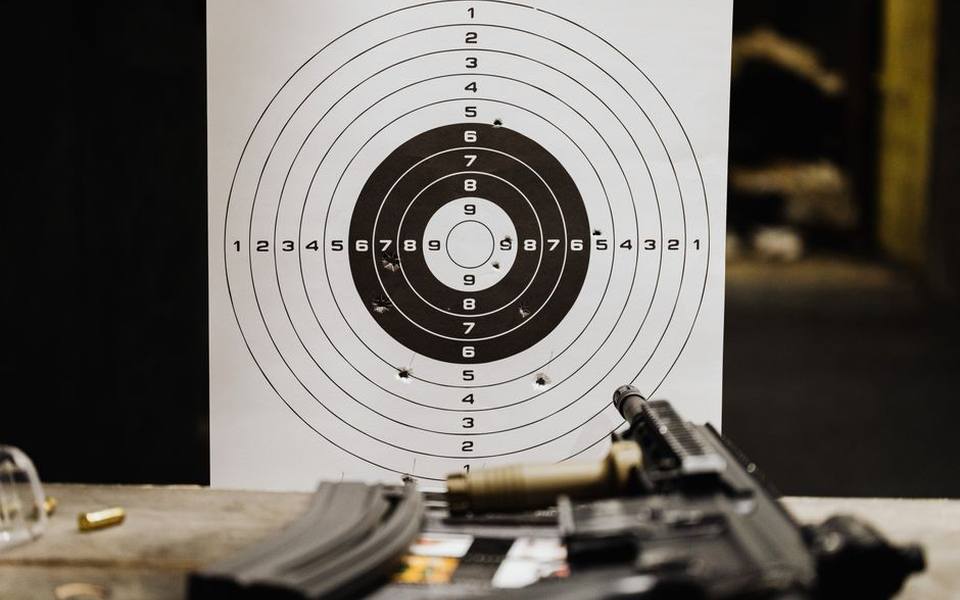
Traditional indoor facilities often enforce rigid stall boundaries, prohibiting shooters from drawing out of a holster, running rapid fire sequences, or stepping ahead of the firing line. In contrast, specialized facilities—often found among full-service indoor shooting ranges equipped with baffled tactical bays—permit low-light training, strobe integration, and transitional movement under the supervision of a range safety officer. The backstops at these facilities are engineered to withstand unconventional shooting angles, preventing ricochets and capturing lead efficiently.
When evaluating a venue for higher-tier training, shooters should investigate the range rules regarding steel targets, minimum engagement distances, and drawing from the holster. High-volume live-fire runs generate significant heat and lead particulate, so ventilation quality inside enclosed bays must meet rigorous industrial standards. Before booking multi-day clinics, verify whether instructors carry private range safety certifications and check that the facility allows practical gear layouts, magazine carriers, and chest rigs.
Force-on-Force Drills and Real-World Stress Inoculation
Cardboard and paper targets provide immediate ballistic feedback, but they cannot assess a shooter's judgment under interpersonal adrenaline dumps. Force-on-force training fills this critical operational gap by introducing thinking, reacting human role-players armed with non-lethal marking cartridges. Experiencing incoming projectile fire dramatically alters visual focus, triggering tunnel vision, auditory exclusion, and fine-motor degradation that flat-range drills simply cannot replicate.
During scenario-based modules, participants must navigate shoot-or-no-shoot situations where verbal de-escalation, situational awareness, and retreat may prove superior to drawing a firearm. Instructors use dedicated marking rounds or converted conversion barrels, requiring rigorous personal protective equipment including impact-rated face masks, throat guards, and groin protectors. The physiological toll of taking fire forces students to experience cognitive overload, teaching them how to process sensory inputs while maintaining weapon control.
The most critical phase of any force-on-force clinic takes place during the debriefing circle directly following each run. Video analysis and instructor critiques dissect where the student looked, whether they recognized pre-attack cues, and how effectively they communicated before and during the engagement. These exercises highlight procedural flaws—such as standing frozen in fatal funnels or failing to seek cover—long before those habits can lead to catastrophic consequences in civilian life.
Modern Optic Fundamentals and Red Dot Sight Work
The widespread shift from traditional iron sights to miniature red dot sights on defensive handguns has revolutionized modern combat marksmanship. While red dots offer a single focal plane advantage—allowing shooters to remain target-focused rather than front-sight-focused—mastering them requires specific pedagogical adjustments. Red dot training addresses common beginner obstacles, including the frustrating search for the reticle during hasty presentations and managing optical parallax under unconventional shooting stances.
Proper dot acquisition depends entirely on a consistent, repeatable presentation stroke rather than visually hunting for the glass window. Instructors teach students to drive the pistol directly toward the target, bringing the optic housing into the natural line of sight so the dot appears floating on the intended point of impact. Training also covers mechanical offset at extreme close contact, where the distance between the optical window and the bore centerline causes rounds to strike lower than expected.
Durability drills form another crucial component of optic-specific education, preparing students for inevitable equipment anomalies. Courses routinely feature occluded eye shooting—where instructors tape over the front lens to force the brain to superimpose the reticle stereoscopically—alongside one-handed manipulation off belts or holsters if the glass fractures. Understanding battery management, torque specifications for mounting screws, and witness-marking fasteners protects users from catastrophic optic failures during live defensive encounters.
Specialized Armorer Courses and Hardware Reliability
Dynamic training places heavy mechanical stress on defensive handguns, making in-depth mechanical knowledge an invaluable asset for serious practitioners. Attending a certified factory program, such as a formal Glock armorers course, demystifies the internal mechanics, tolerances, and drop-safety mechanisms that keep modern striker-fired pistols operational. Rather than merely cleaning a field-stripped firearm, armorer-trained shooters understand trigger bar engagement percentages, spring tension dynamics, and pin wear limits.
These technical programs teach participants how to completely detail-strip frames and slide assemblies using dedicated hand tools, eliminating reliance on third-party gunsmiths for basic component replacements. Students inspect firing pin safeties, assess ejector angles, diagnose extractor tension, and detect hairline micro-fractures in high-wear metal stampings. For high-volume shooters who run thousands of defensive rounds annually, understanding parts replacement schedules prevents sudden stoppages during training classes or duty shifts.
Beyond technical maintenance, armorer certifications carry important legal and liability ramifications for institutional security teams and concealed carriers. Understanding factory specifications prevents individuals from installing unauthorized aftermarket trigger modifications that could be scrutinized heavily during post-incident civil depositions. Knowing precisely how safety plungers, cruciform sears, and firing pin springs interact ensures that defensive firearms remain both mechanically drop-safe and completely reliable.
Law Enforcement Courses and Mandated Qualifications
Police officers and armed security professionals must continually maintain regulated shooting standards governed by state peace officer standards and training boards. Specialized law enforcement courses go far beyond standard annual marksmanship benchmarks, incorporating vehicle interdiction, low-light flashlight techniques, moving target engagements, and weapon-retention struggles. These programs emphasize rapid accountability, recognizing that missed rounds in municipal or crowded suburban settings present severe collateral danger.
A formal law enforcement qualification course typically features tiered distance stages ranging from contact distance to twenty-five yards, governed by strict timing intervals via automated turning targets. Officers must draw from duty-retention holsters, transition between primary patrol carbines and sidearms, execute tactical reloads behind physical cover, and clear induced dummy-round malfunctions. In widespread operational states with deep training footprints, including many shooting ranges in Texas, law enforcement personnel utilize specialized bays designed for rapid patrol qualifications.
Instructors evaluating these qualifications maintain strict zero-tolerance scoring thresholds for safety violations or stray rounds striking outside defined human silhouette scoring zones. Passing these courses establishes a clear legal standard of agency competence, demonstrating that officers can employ proportionate, accurate lethal force under heightened cardiovascular strain. Continuous training ensures that critical tactical decisions, such as when to transition to less-lethal options, occur instinctively amid chaotic, real-world public confrontations.
Retiree Standards and the LEOSA HR 218 Qualification
The Law Enforcement Officers Safety Act, commonly referred to as HR 218, grants qualified active and retired law enforcement personnel the legal authority to carry concealed firearms across state lines. However, retired officers must maintain compliance through an annual firearms certification that mirrors the state's active-duty standard for civilian-carried handguns. Without an up-to-date qualification card and valid agency credentials, the nationwide federal carry privilege becomes legally invalid.
The hr218 qualification requires shooters to run an official state-mandated course of fire under the observation of a certified law enforcement firearms instructor. Course requirements typically feature multiple strings of fire at various distances, demanding one-handed weak-side shooting, mandatory emergency reloads, and precision head-box or thoracic cavity hits within designated time windows. Because retirees often transition from full-sized service handguns to subcompact concealed-carry frames, maintaining this standard requires regular, dedicated practice.
Navigating state-to-state LEOSA requirements can be intricate, as individual states designate different agencies, civilian range masters, or county sheriff departments to administer testing. Once completed, the official qualification stamp typically remains active for exactly twelve months, requiring meticulous calendar tracking by the retired officer. Keeping accurate documentation alongside the original retired identification card protects individuals against jurisdictional confusion when traveling across states with strict local firearm statutes.
Faith-Based Safety and Church Security Training
Balancing a welcoming, open spiritual sanctuary with comprehensive physical protection requires specialized, highly discreet tactical preparation. Dedicated church security training has grown significantly as places of worship recognize the need to counter violent disruptions, active shooter events, and medical crises without intimidating congregations. These programs focus heavily on situational awareness, non-verbal threat cues, conflict de-escalation, and physical staging within crowded auditoriums.
Safety team members must operate under entirely different engagement parameters than solo concealed carriers or uniformed patrol officers. Crowded seating rows, narrow foyer corridors, and children's education wings present severe backstop challenges that make traditional engagement angles extraordinarily hazardous. Training scenarios emphasize extreme close-quarters shooting, establishing angles of fire that drive down into the deck, and working in coordinated multi-person pairs to isolate and control aggressive actors.
Effective faith-based security also integrates silent communication protocols, perimeter monitoring, and access-control hardware adjustments. Team members drill response choreography for simultaneous evacuation, medical triage, and threat isolation, coordinating directly with local law enforcement dispatchers to prevent blue-on-blue crossfire misunderstandings. In most states, church safety teams must operate under specific state licensing rules or risk civil liability, making structured, professional institutional coaching an absolute operational necessity.
Tactical Emergency Medical Services and Trauma Care
Marksmanship represents only half of the survivability equation in violent physical encounters; managing traumatic hemorrhage afterward saves just as many lives. Tactical emergency medical services training bridges the gap between tactical operations and emergency medicine, teaching defensive practitioners how to operate under the principles of Tactical Combat Casualty Care. These courses dismantle the myth that calling emergency medical dispatch is an immediate solution, recognizing that severe arterial wounds cause death in minutes.
Students learn the precise application of windlass and ratcheting tourniquets, hemostatic gauze packing for junctional wounds, and the placement of vented chest seals to treat tension pneumothorax. Instructors run rigorous live-drill scenarios where participants must place a tourniquet on their own limbs in the dark or under induced physical exhaustion while holding a simulated weapon. Understanding how to manage trauma inside a warm zone—where a threat may still linger nearby—dictates when to treat injuries versus when to suppress danger.
Carrying trauma supplies on the range or in a daily bag should become as instinctive as carrying an extra magazine or personal defense tool. Selecting medical components requires the same scrutiny as selecting firearms hardware, focusing strictly on equipment approved by the Committee on Tactical Combat Casualty Care. Integrating medical response into live-fire training ensures that shooters instinctively switch from stopping threats to preserving life the moment the dynamic environment permits.
Curriculum Progression and Vetting Quality Instruction
Navigating the landscape of defensive education requires an objective approach to vetting instructor resumes and avoiding dangerous training fads. When researching local gun and shooting ranges near you, prioritize academies led by individuals with verifiable law enforcement, military, or competitive credentials rather than flashy social media profiles. A reputable training school operates with documented standard operating procedures, comprehensive liability coverage, and strict student-to-instructor ratios.
A logical progression path begins with weapon mechanics and concealed-carry dynamics, moves into optic manipulation, and advances into movement, cover utilization, and low-light operations. High-level force-on-force clinics and tactical medicine should be integrated continuously rather than treated as isolated milestones. Shooters should avoid programs that encourage unsafe theatrics, such as instructors standing downrange near live targets or pushing students past their basic handling competence before foundations are solid.
Equipping yourself properly for a multi-day tactical clinic also requires practical preparation regarding gear wear, ammunition quantities, and physical stamina. Holsters must feature rigid Kydex or leather construction that does not collapse upon reholstering, and belts must support the loaded weight of defensive magazines and medical pouches without sagging. Continuous, thoughtful investment in vetted training builds real-world defensive confidence that no piece of aftermarket hardware can ever replace.
Published 2026-09-21 · reviewed with each rebuild, last September 2026.
Find shooting ranges near you
The directory lists 6,919 shooting ranges by state and city — pick your state or use the “Near me” button in the header.
More guides
-
 Safety
Can a Felon Go to a Shooting Range? Federal Rules, Range Policies, and Shooting Sports Explained
-
 Money
MoneyGun Range Costs and Rental Guide: Fees, Ammo, and What to Expect
-
 Safety
Concealed Carry Permit Costs, Classes, and Certification Guide
-
 Service
Pinning and Welding a Muzzle Device: Legal Standards and Technical Steps
-
 Buying
FFL Transfer Fees, Background Checks, and NFA Kiosks Explained
-
 Buying
Where and How to Buy Police Trade-In Firearms Safely
-
 Owning
Beginner Guide to Long-Range Shooting: Distances, Tips, and Calculators
-
 Owning
How to Choose the Best Outdoor Shooting Range for Your Needs
-
 Safety
Indoor & Public Shooting Ranges: Etiquette, Costs, & Locating Ranges
-
 Safety
Gun Safety Courses, Hunter Education, and Concealed Carry Certification Guide
-
 Owning
Firearms Licensing, FOID Cards, and Background Checks: Verification, Processing, and Appeals
-
 Owning
Target Shooting Sports: Clay, Trap, Skeet, and Precision Rifle Disciplines
-
 Owning
Gun Cleaning Kits and Maintenance: Solvents, Bore Snakes, and Ultrasonic Cleaners
-
 Safety
Shooting Range Ear Protection & Custom Molded Earplugs
-
 Owning
Shooting Range Accessories: Eye Protection, Range Bags, and Shooting Rests
-
 Owning
Indoor Archery and Crossbow Shooting: Practical Range Guide, Zeroing, and Gear
-
 Service
Gunsmithing Services: Firearm Restoration, Stock Refinishing, and Custom Work
-
 Storage
Gun Safes and Storage Solutions: Biometric Locks, Humidity, and Ammo Storage
-
 Safety
Custom Molded Hearing Protection and Shooting Earplugs Guide
-
 Owning
Modern Shooting Ranges, Home Simulators, and Training Memberships
-
 Buying
Shooting Gear, Target Optics, Tools, and Ballistics Essentials
-
 Owning
Firearm Licensing, Permits, Background Checks, and Guard Rules
-
 Safety
Firearms Training and Self-Defense Classes: Beginner to Advanced
-
 Safety
Target Practice in the Digital Age: Viral Trends, Range Etiquette, and Practical Drills
-
 Owning
Custom Kydex Holsters Guide: Types, Revolver Fits, and Draw Techniques
-
 Safety
Tactical Defense Courses: Active Shooter Response, Medic Training, and Self-Defense
-
 Owning
Complete Guide to Kitchen Range Hood Venting, Ductwork, and Installation
-
 Service
Creative Birthday Photoshoot Ideas for Kids, Teens, and Adults
-
 Buying
Portable, Ductless, and Under-Cabinet Range Hood Selection Guide
-
 Buying
Commercial Kitchen Exhaust Hoods: Complete Selection and Ventilation Guide
-
 Safety
NRA Range Safety Officer Certification: Requirements, Training, and Field Expectations