The Scope of Modern Gunsmithing Services
Professional gunsmithing bridges mechanical engineering, metallurgical science, and traditional craftsmanship. When you bring an arm to a professional workshop, the work typically begins with a detailed mechanical assessment rather than an immediate teardown. Gunsmiths evaluate headspace, sear engagement, feed geometry, and bore condition before recommending action. Knowing what falls under standard repair work versus specialized customization helps firearm owners choose the appropriate shop, as an armorer who handles drop-in assembly may not have the tooling for precision machining.
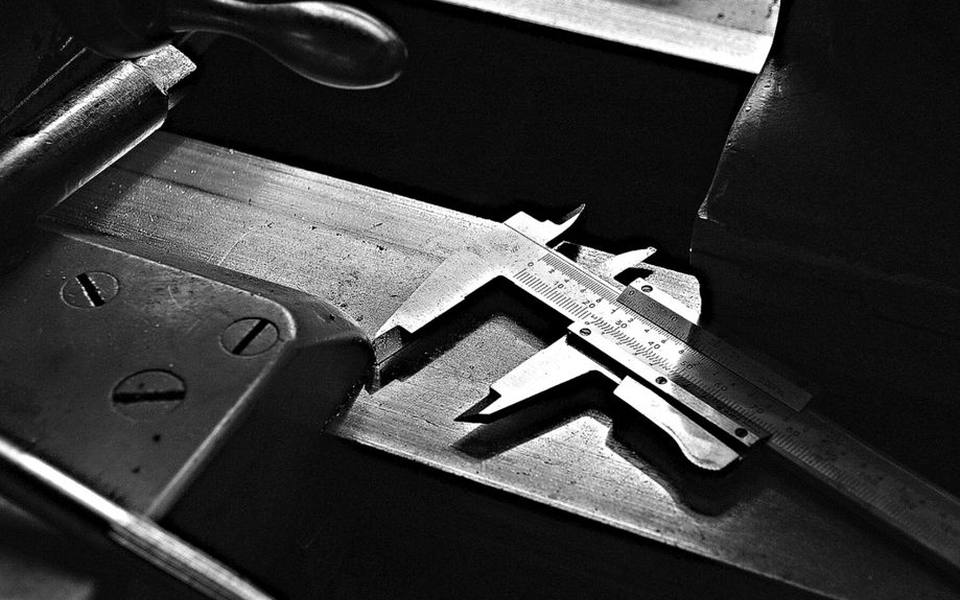
General gunsmith services cover everything from clearing stubborn barrel obstructions and extracting stripped screws to fabricating obsolete components from raw bar stock. Most community-based gunsmiths spend the bulk of their time diagnosing feeding malfunctions, rectifying ejection failures, and smoothing rough factory triggers. They use specialized fixtures, headspace gauges, and depth micrometers to identify micro-tolerances that the naked eye simply cannot detect, ensuring that the firearm operates strictly within safe factory pressure specifications.
Beyond routine troubleshooting, full-service shops handle preventative maintenance packages that disassemble firearms far beyond field-stripping levels. Ultrasonic cleanings, bore scoping, and magnetic particle crack inspections are common steps for heavily used field shotguns or competition handguns. Before committing to work, it is wise to consult local firearm specialists who can evaluate whether a simple spring replacement will resolve your issue or if dedicated machine time will be necessary.
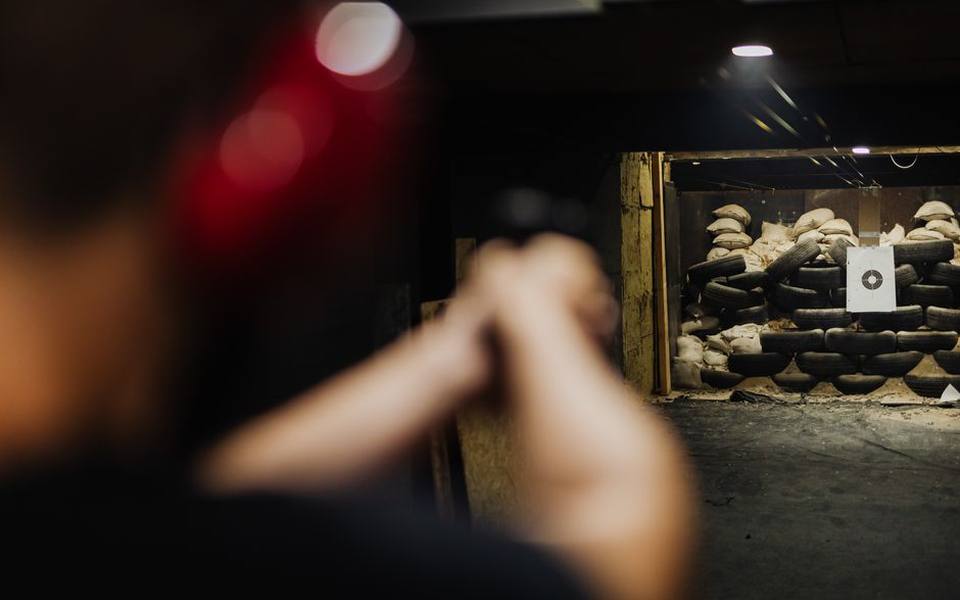
Many owners initially discover they need gunsmith support while spending an afternoon practicing. If you notice persistent cycling issues or unusual primer strikes while visiting indoor shooting ranges, taking notes on the exact failure patterns will provide your gunsmith with invaluable diagnostic context when you drop off the firearm for repair.
Transforming Worn Wood Through Gun Stock Refinishing
Wooden stocks carry character, but decades of exposure to rain, gun oils, and rough handling leave walnut, birch, or maple looking muddy and bruised. A complete gun stock refinishing project starts with the careful removal of the metalwork, ensuring that delicate trigger guards and action screws are extracted without rounding their slots. Chemical strippers are generally preferred over aggressive dry sanding because sanding can irrevocably alter the critical wood-to-metal fit around the tang and receiver.
Once stripped clean, technicians work out shallow field dings using controlled heat and damp cloths, pulling the compressed wood fibers back to the surface through steaming. Deep gouges that have cut across the grain may require matched wood plugs or micro-fillers blended to match the existing grain flow. Hand-sanding proceeds sequentially through progressively finer grits, always using a rigid backing block to keep edges sharp and prevent the dishing of pinholes and inletting contours.
The finishing phase depends entirely on the intended purpose of the firearm. Traditional field firearms often receive multiple coats of hand-rubbed tung or boiled linseed oil, which penetrates deeply into open pores and provides an authentic, repairable satin glow that breathes with humidity changes. Modern weather-resistant applications may instead call for hand-rubbed polyurethane blends or automotive-grade lacquers that cure to a hard shell against torrential field conditions.
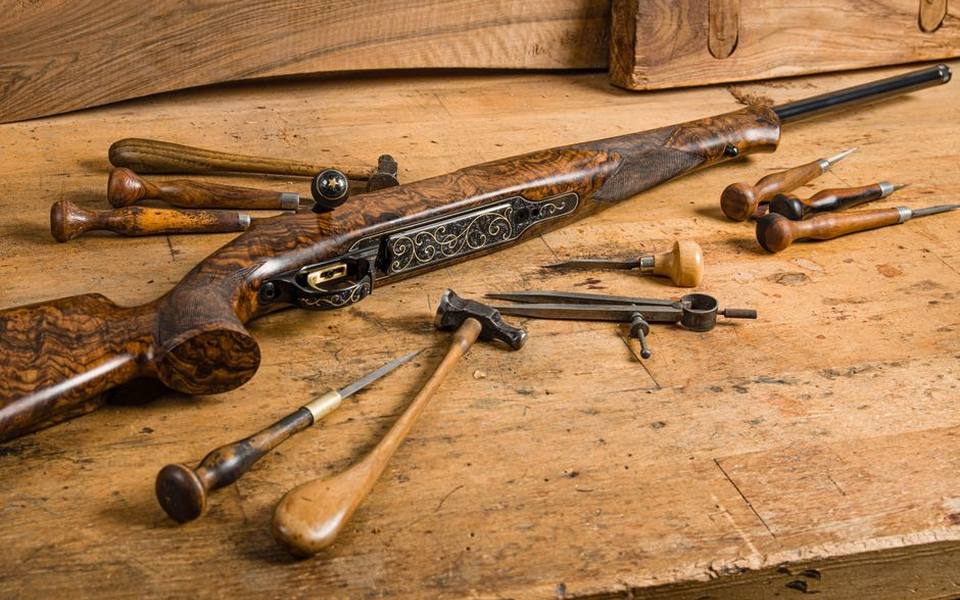
Re-cutting checkering is usually the final step of stock preservation. Chemical strippers and heavy finish layers tend to fill or dull the sharp diamonds originally cut into grips and forends. A seasoned craftsman uses specialized checkering cradles and single-line carbide cutters to recut each groove, restoring positive grip traction while highlighting the natural contrast of the freshly oiled timber.
Enhancing Precision with Rifle Glass Bedding
Even high-end factory rifles can suffer from microscopic shifts between the barreled action and the supporting stock during recoil. Glass bedding rifle actions involves creating an exact, stress-free epoxy cradle between the receiver and the wood or composite chassis. When action screws are tightened, any uneven pressure points in the stock inletting introduce torque into the action, which translates directly into shifting points of impact on the target.
During the glass bedding procedure, the gunsmith meticulously removes a controlled depth of factory wood or polymer from the receiver mortise and recoil lug recess. The metal receiver is coated in a micro-thin release agent, while a high-density, steel- or fiberglass-reinforced epoxy compound is pressed into the prepared stock cavities. When the barreled action is clamped securely into position, the curing epoxy flows into every void, producing a negative impression of the receiver that mirrors its exact profile down to thousandths of an inch.
Pillar bedding is frequently paired with glass bedding to achieve ultimate mechanical stability. This technique inserts rigid aluminum or brass sleeves around the action screw holes, preventing the wood or composite material from compressing over years of environmental temperature and moisture swings. The rifle action effectively rests on rigid metal columns surrounded by a custom-molded epoxy bed, isolating barrel harmonics from exterior forces.
The final phase of bedding almost always involves free-floating the barrel forward of the recoil lug. Removing stock contact along the length of the forend prevents pressure changes caused by sling tension, bipod loads, or temperature expansion. When tested at regional facilities found through gun and shooting ranges near you, a properly glass-bedded rifle typically displays tighter groups, minimal cold-bore deviation, and consistent accuracy.
Precision Barrel Threading and Muzzle Work
The surging interest in muzzle brakes, linear compensators, and sound suppressors has made barrel threading service one of the most requested machine operations in modern workshops. Threading a muzzle is far more complex than running a manual die over the end of a steel tube. The cut threads must be perfectly concentric to the internal bore of the barrel rather than the outside taper, which is rarely straight or centered relative to the rifling.
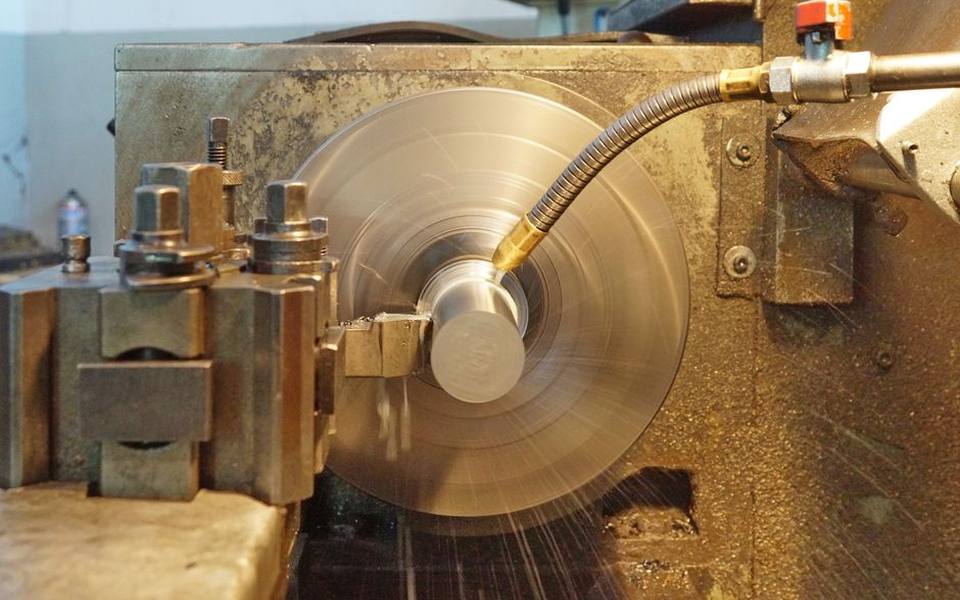
A machinist centers the barrel in an engine lathe using a dial indicator inside the bore to ensure true alignment within tenths of a thousandth of an inch. The barrel shoulder is then turned down to a precise diameter, and the specific thread pitch—commonly half-by-twenty-eight for smaller calibers or five-eighths-by-twenty-four for standard thirty-caliber projectiles—is cut single-point on the lathe. Creating a square, crisp shoulder behind the threads is essential, as this provides the alignment surface for precision suppressors.
Cutting the muzzle crown is typically performed during the same lathe setup. Any slight asymmetry, nick, or burr at the muzzle exit unevenly vents high-pressure gas against the base of the bullet as it clears the rifling, throwing off its flight path. Cutting an eleven-degree target crown or an inset recessed crown shields the fragile rifling termination from drops and impacts, maximizing long-range consistency.
After threading, a responsible gunsmith coats or blues the freshly cut metal to protect it from moisture, fitting a flush-matching thread protector cap when muzzle accessories are not attached. Muzzle accessories alter the barrel's natural harmonic vibration, so you should expect your rifle's zero to shift slightly after any muzzle threading and device installation.
The Ethical Approach to Antique Gun Restoration
Navigating antique firearm restoration requires a disciplined balance between preservation and mechanical intervention. Enthusiasts often conflate total refinishing with restoration, which can prove financially devastating when dealing with collectible pieces. Stripping original patina or polishing down historic inspector cartouches can reduce a nineteenth-century firearm's auction appraisal value by substantial margins within minutes.
Professional antique gun restoration prioritizes historical conservation. When rust is present, the focus is on converting active red iron oxide into stable black magnetite through gentle steam or boiling water conversions, followed by carding with soft wire wheels or coarse denim. This traditional method halts ongoing corrosion without cutting into the original base metal or rounding off sharp frame bevels, preserving the marks left by historic factory armories.
When structural metal work is required—such as welding cracked frames, repairing stripped trigger guards, or repairing damaged timing lugs—the gunsmith must use period-appropriate metallurgical techniques. Modern high-temperature welding can alter the heat treatment of fragile vintage steels. Low-temperature micro-TIG welding or silver brazing is frequently deployed to preserve the integrity of nearby aged alloys.
Finishes on historic pieces must also reflect the exact era of the firearm's production. A nineteenth-century piece should never be treated with contemporary hot-dip tank caustic salts. True slow-rust blueing, charcoal bluing, or traditional color case hardening with bone and wood charcoal must be selected to match how the piece left the maker's floor over a century ago.
Specialized Challenges in Antique Rifle Restoration
Undertaking an antique rifle restoration brings unique mechanical hurdles, particularly regarding bore condition and pressure management. Many historic long arms spent decades firing corrosive black powder ammunition or primer mixtures based on potassium chlorate, leaving pitted chambers, worn rifling, and eroded lands that struggle to stabilize modern jacketed projectiles.
When an antique rifle bore is pitted beyond functional accuracy, a gunsmith can assess whether relining the barrel is an appropriate preservation route. Relining involves boring out the worn interior of the barrel while leaving the exterior profile, proofs, and sight mounts completely untouched. A precision-machined steel liner with modern rifling is then epoxied or silver-soldered in place, effectively returning the rifle to factory shooting condition without destroying its vintage exterior aesthetic.
Headspace checks and chamber casting are critical before firing any legacy long arm. Gunsmiths pour low-melting-point bismuth alloys into cleaned chambers to produce exact three-dimensional casts of the firing chamber and neck dimensions. This allows them to identify custom wildcat chambers or measure chamber stretch that could cause catastrophic case ruptures during ignition.
Wood-to-metal fitting on historic rifles also requires patience. Aged wood naturally shrinks as its organic moisture stabilizes over a century, leaving loose bands, loose tangs, and uneven barrel channel pressure. Gunsmiths carefully adjust the action bedding with traditional beeswax or discrete shims to prevent vintage stocks from cracking under the recoil of modern light loads.
Laser Engraving and Custom Decorative Work
Personalizing firearms has evolved from slow hand-chasing with hammer and chisels to advanced digital precision. A laser engraving gun stock project combines fine woodworking with computer-assisted design, permitting intricate checkering patterns, family crests, scrollwork, or commemorative lettering that would be cost-prohibitive if carved by hand.
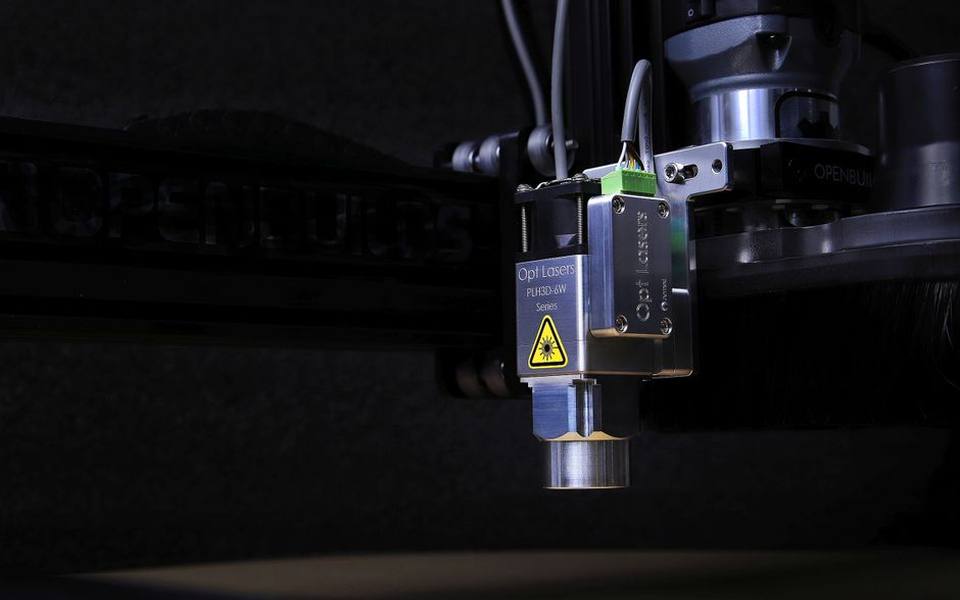
Fiber and carbon-dioxide lasers operate differently depending on the material being customized. CO2 lasers are generally preferred for timber stocks because their wavelength vaporizes organic cellulose cleanly, producing sharp details without charring or tearing fragile grain fibers. Fiber lasers, on the other hand, are engineered to etch deeply into hardened receiver metals, slide steels, and anodized aluminum frames without imparting mechanical stress.
Preparation is vital when engraving finished wood. The gunsmith scans the physical curve of the buttstock or grip area using surface-mapping software, adjusting the laser's focal distance across compound three-dimensional contours. This ensures the cut depth remains uniform across the entire surface, preventing shallow marks at the crest of a grip swell or scorched zones near the flat edges.
After the laser completes its passes, the newly exposed wood pores inside the pattern must be sealed immediately. Technicians apply targeted coats of drying oils or microcrystalline waxes into the engraved lines to prevent moisture intrusion from swelling the unprotected grain. Done skillfully, laser embellishment creates a tactile, durable texture that enhances handling grip while transforming a production firearm into a one-of-a-kind heirloom.
Navigating the Firearm Trade-In Process
Upgrading an armory or shifting interest to a different shooting discipline often leads owners to consider a firearm trade in at a licensed gun shop. Trading an existing rifle or handgun directly toward the purchase of a new platform avoids the paperwork, shipping hassles, and listing fees of private sales, but understanding how retail valuations work ensures realistic expectations.
When assessing a trade, dealers do not base their offers on original retail prices or current replacement cost. They consult live wholesale databases, secondary market transaction records, and physical inventory balance. A dealer typically offers a percentage of what they reasonably expect to sell the firearm for on their used rack, leaving room for safety inspections, cleaning overhead, and profit margin.
Maximizing your trade equity requires careful preparation. Bring along all original accessories, including factory hard cases, owner documentation, choke tubes, alternate backstraps, and factory magazines. Having these components intact allows the dealer to list the piece as a complete package, which commands a noticeable premium on the pre-owned market compared to a bare firearm.
Condition plays an indisputable role in value. Take the time to wipe down the bore, clear carbon from the bolt face, and remove stubborn grease before presenting the firearm. If you are shopping around to test different platforms before trading, you can explore facilities offering ranges offering firearm rentals to evaluate your preferred replacements firsthand.
Verification and Live-Fire Range Testing
A gunsmith's work is never truly complete when the action is reassembled at the bench. Bench diagnostics and dry cycling reveal baseline mechanical function, but live-fire testing is required to confirm safety, timing, feeding reliability, and sighting accuracy under realistic operating pressures.
During live-fire testing, technicians evaluate primer indentations for centered, round strikes that indicate correct firing pin protrusion and headspace clearance. They monitor extraction and ejection angles, ensuring spent casings clear the receiver cleanly without marring the ejection port or bouncing erratically into the shooter's line of sight, which can indicate spring exhaustion or extractor claw wear.
For rifles that have received new barrel threading, target crowning, or glass bedding, accuracy testing takes center stage. The gunsmith shoots groups from supported bench bags or machine rests to confirm that bullet dispersion falls within factory or match expectations. This step confirms that the newly bedded action does not suffer from barrel vibration interference or erratic harmonic nodes.
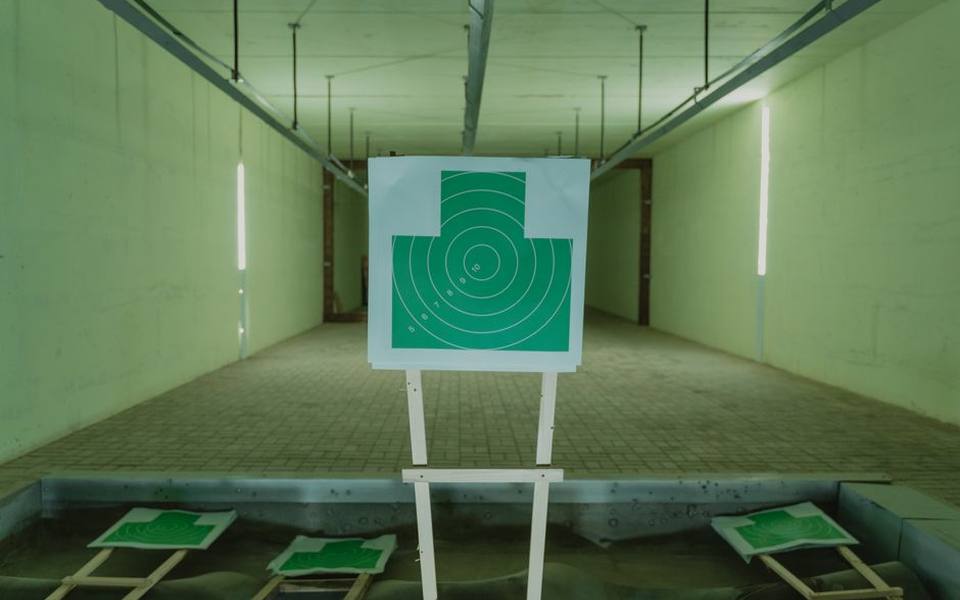
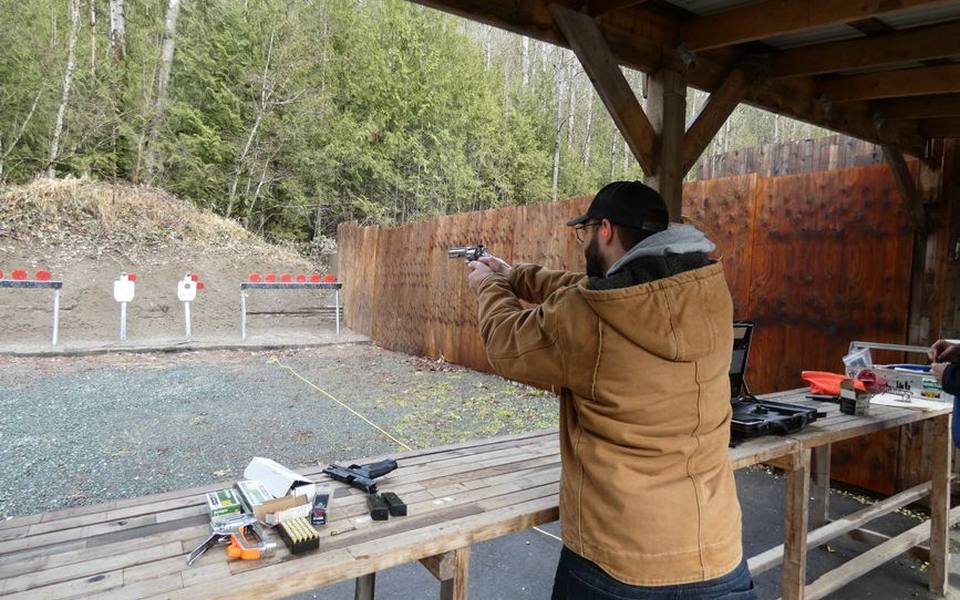
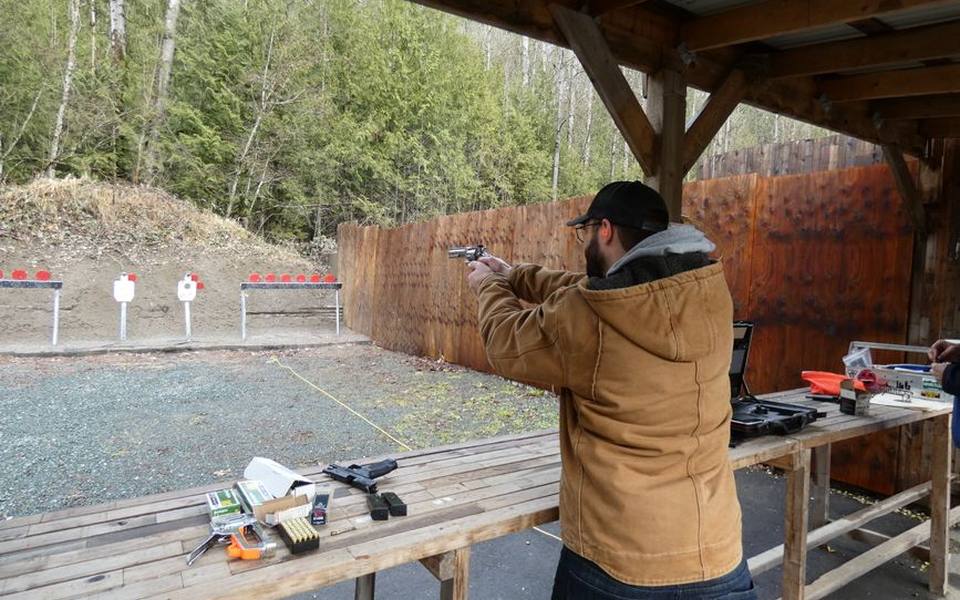
Many shooters choose to conduct their own secondary validation at local shooting establishments. Reserving space at facilities that provide public lane and firearm rentals allows owners to run several boxes of their chosen ammunition through the tuned firearm, confirming baseline zero and mechanical comfort before heading into competitive matches or opening day hunts.
Vetting a Gunsmith and Managing Turnaround Expectations
Entrusting a valuable firearm to a workshop requires doing your due diligence. The title of gunsmith can encompass a wide range of skill levels, from self-taught assembly hobbyists to master machinists who have completed formal multi-year polytechnic apprenticeships. When vetting a potential shop, ask about their specific experience with your particular firearm action, whether it is an intricate vintage lever-action or a modern precision bolt gun.
Turnaround times can vary significantly depending on the nature of the project. Routine maintenance tasks like scope mounting, bore-sighting, or simple parts replacement might take only a few business days. In contrast, extensive antique restorations, custom lathe threading, and hand-rubbed oil stock refinishing can span several months due to workshop backlogs and the natural curing times required for paints, finishes, and bedding epoxies.
Clear communication prevents misunderstandings regarding estimates and shop minimums. Reputable workshops typically provide a written intake sheet outlining the requested work, noting any pre-existing cosmetic flaws, and establishing a price threshold beyond which they must seek your explicit approval before performing additional work. This protects both parties from surprise shop bills.
Shipping firearms across state lines for custom smithing is entirely lawful in the United States when following federal regulations, though carrier policies and state restrictions must be observed. In most states, an owner can ship a firearm directly to a licensed manufacturer or gunsmith for repair and have it returned directly to their residence without transferring through an intermediary dealer, provided local municipal codes do not dictate otherwise.
Published 2026-09-21 · reviewed with each rebuild, last September 2026.
Find shooting ranges near you
The directory lists 6,919 shooting ranges by state and city — pick your state or use the “Near me” button in the header.
More guides
-
 Safety
Can a Felon Go to a Shooting Range? Federal Rules, Range Policies, and Shooting Sports Explained
-
 Money
MoneyGun Range Costs and Rental Guide: Fees, Ammo, and What to Expect
-
 Safety
Concealed Carry Permit Costs, Classes, and Certification Guide
-
 Service
Pinning and Welding a Muzzle Device: Legal Standards and Technical Steps
-
 Buying
FFL Transfer Fees, Background Checks, and NFA Kiosks Explained
-
 Buying
Where and How to Buy Police Trade-In Firearms Safely
-
 Owning
Beginner Guide to Long-Range Shooting: Distances, Tips, and Calculators
-
 Owning
How to Choose the Best Outdoor Shooting Range for Your Needs
-
 Safety
Indoor & Public Shooting Ranges: Etiquette, Costs, & Locating Ranges
-
 Safety
Gun Safety Courses, Hunter Education, and Concealed Carry Certification Guide
-
 Owning
Firearms Licensing, FOID Cards, and Background Checks: Verification, Processing, and Appeals
-
 Owning
Target Shooting Sports: Clay, Trap, Skeet, and Precision Rifle Disciplines
-
 Owning
Gun Cleaning Kits and Maintenance: Solvents, Bore Snakes, and Ultrasonic Cleaners
-
 Safety
Shooting Range Ear Protection & Custom Molded Earplugs
-
 Safety
Tactical Firearms Training and Advanced Defense Courses Guide
-
 Owning
Shooting Range Accessories: Eye Protection, Range Bags, and Shooting Rests
-
 Owning
Indoor Archery and Crossbow Shooting: Practical Range Guide, Zeroing, and Gear
-
 Storage
Gun Safes and Storage Solutions: Biometric Locks, Humidity, and Ammo Storage
-
 Safety
Custom Molded Hearing Protection and Shooting Earplugs Guide
-
 Owning
Modern Shooting Ranges, Home Simulators, and Training Memberships
-
 Buying
Shooting Gear, Target Optics, Tools, and Ballistics Essentials
-
 Owning
Firearm Licensing, Permits, Background Checks, and Guard Rules
-
 Safety
Firearms Training and Self-Defense Classes: Beginner to Advanced
-
 Safety
Target Practice in the Digital Age: Viral Trends, Range Etiquette, and Practical Drills
-
 Owning
Custom Kydex Holsters Guide: Types, Revolver Fits, and Draw Techniques
-
 Safety
Tactical Defense Courses: Active Shooter Response, Medic Training, and Self-Defense
-
 Owning
Complete Guide to Kitchen Range Hood Venting, Ductwork, and Installation
-
 Service
Creative Birthday Photoshoot Ideas for Kids, Teens, and Adults
-
 Buying
Portable, Ductless, and Under-Cabinet Range Hood Selection Guide
-
 Buying
Commercial Kitchen Exhaust Hoods: Complete Selection and Ventilation Guide
-
 Safety
NRA Range Safety Officer Certification: Requirements, Training, and Field Expectations