Finding the Right Indoor Facility for Bow and Crossbow Practice
Indoor shooting venues offer consistent climate control, dependable lighting, and freedom from shifting crosswinds, making them the standard venue for dialling in accuracy. Many conventional Indoor Shooting Ranges and specialized archery pro shops cater to both compound bows and high-energy crossbows. Before booking lane time, you should confirm whether a facility permits crossbows alongside traditional gear, as the extreme velocity and energy of modern bolts require heavy-duty backstops designed to stop fast projectiles without ruining fletchings or burying shafts beyond recovery.
Range configurations typically feature fixed distances of eighteen meters or twenty yards, though larger centers occasionally provide thirty- to forty-yard lanes for tuning hunting rigs. Finding suitable shooting range facilities usually comes down to equipment rules and peak hours. Target lanes during evening hours often host local leagues, while mid-morning weekday slots generally offer a quieter environment that allows beginners to set up shooting rests and take their time without feeling rushed by neighboring archers.
Lane fees generally follow hourly or daily flat-rate structures, depending on the venue and regional demand. When inspecting a new range, pay attention to the lane separation, arrow retrieval lighting, and whether target butts are maintained regularly. Worn centers on community targets can allow bolts to punch through to the wall, which risks bending carbon shafts and damaging broadheads or field tips before you even finish your first warm-up end.
Range Rules, Whistle Commands, and Basic Etiquette
Indoor facilities enforce strict protocols to keep everyone safe along a shared shooting line. The firing line is usually marked by a continuous red or yellow tape on the floor, behind which archers must wait until the range officer signals that shooting is open. Arrows and bolts must remain unquivered or uncocked until you are physically positioned straddling or standing behind the line, facing downrange toward your assigned lane.
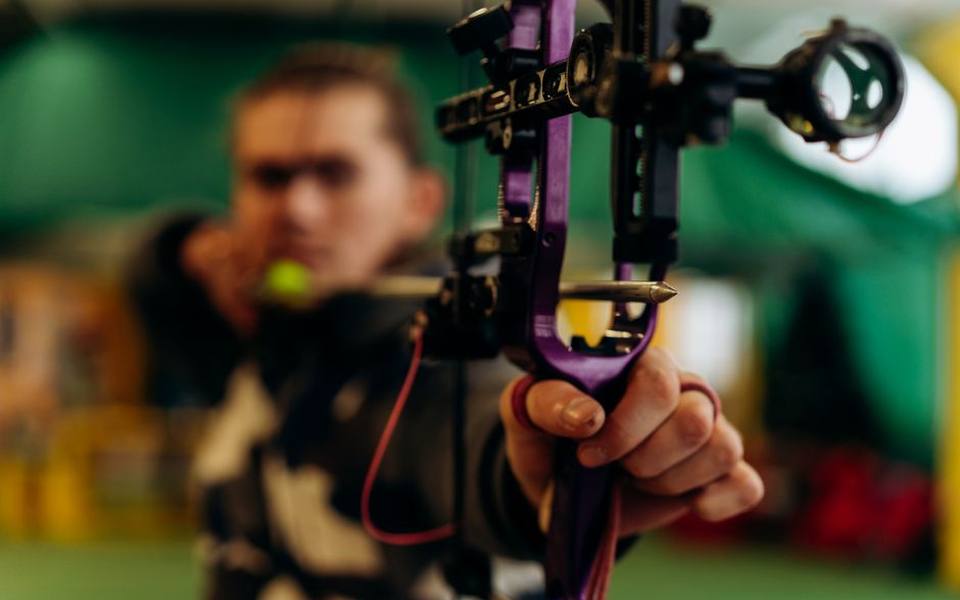
Most indoor setups use standard whistle signals to control the rhythm of shooting and arrow retrieval. Two whistle blasts typically mean you may approach the line and prepare your equipment; one blast signals permission to shoot; and three blasts indicate that the line is clear and you may walk forward to retrieve arrows. Five or more rapid blasts, or a loud vocal shout of cease-fire, require everyone to immediately stop, de-cock or lower bows, and step behind the waiting line.
Retrieving arrows demands equal care. When you walk forward, walk directly to your target without wandering into adjacent lanes, and check behind you before pulling arrows out of the foam to avoid striking someone with the nock end. Crossbow shooters should carry an arrow puller tool or silicone gripper, as high-friction carbon bolts lodged deeply into compressed foam can require significant force to remove without bending the shaft.
Selecting Dedicated Target Practice Arrows and Bolts
Consistent accuracy begins with arrow balance, spine stiffness, and weight uniformity. For archery target practice, archers typically use standard carbon or aluminum shafts fitted with screw-in field points rather than mechanical or fixed broadheads. Field points protect target longevity, pull out of foam butts much easier, and prevent the rapid shredded wear caused by cutting blades, which most commercial indoor centers strictly prohibit on their main backstops.
Crossbow bolts must match the manufacturer specifications for minimum total finished grain weight, arrow length, and nock design. Modern crossbows produce tremendous kinetic energy, and firing an underweight bolt mimics a dry fire, which can split limbs, derail strings, and void warranties. Always check whether your setup requires flat nocks, half-moon nocks, or specialized capture nocks, as using the wrong profile can let the bowstring slip over or under the shaft during the power stroke.
When purchasing target practice arrows, buying in matched sets of six or twelve from consistent production lots prevents unexplained flyers. Inexpensive bulk arrows found online occasionally display wide variances in straightness tolerances, often fluctuating by several thousandths of an inch, or feature uneven vane adhesion. Taking time to inspect shafts for carbon hairline cracks by gently flexing each bolt before shooting is an essential habit that prevents catastrophic failures on the line.
Crossbow Shooting Mechanics from the Bench and Offhand
Shooting a modern crossbow requires a blend of rifle marksmanship fundamentals and traditional archery safety disciplines. Your body position behind the trigger should remain relaxed yet anchored, with your shoulder seated firmly against the buttstock. Crossbow triggers tend to carry a heavier pull weight and longer creep than tuned centerfire rifles, meaning that deliberate, steady trigger squeeze without jerking is required to keep your crosshairs from drifting off the bullseye.
Hand placement is the most critical safety rule unique to crossbow shooting. The support hand holding the forend must keep all fingers and thumbs positioned strictly beneath the safety wings or finger guards along the barrel. If a thumb or finger extends upward into the flight track during release, the high-speed bowstring will strike it with tremendous energy, causing severe physical trauma. Build a conscious habit of checking thumb placement before touching the safety catch.
Cock your crossbow using a dedicated mechanical crank or balanced rope sled to ensure the string centers perfectly on the latch mechanism. An uneven draw of even an eighth of an inch to either side will alter the string pressure against the bolt, causing horizontal grouping shifts that no amount of optic adjustment can resolve. Once latched, seat the bolt firmly back until the nock touches the string completely.
Stabilizing the Shot with Shooting Sticks and Benches
Because modern hunting crossbows carry most of their mass out toward the front limbs and riser, offhand shooting quickly fatigues the forward arm and introduces noticeable reticle tremor. Utilizing a solid shooting bench or a stable crossbow shooting rest removes human sway, allowing you to isolate optic adjustments and test bolt groups purely on mechanical consistency. A solid rest also ensures beginner shooters focus entirely on breath control and smooth trigger application.
For hunters and shooters preparing for realistic field conditions, a portable crossbow shooting stick or adjustable bipod serves as an exceptional training tool. Monopods offer rapid horizontal tracking but provide minimal vertical damping, whereas bipods and tripod-mounted clamps create an exceptionally steady platform. Practicing transitions from seated bench rests to field-style shooting sticks inside the controlled environment of an indoor lane builds muscle memory without the interference of variable weather.
When placing a crossbow into any mechanical rest, verify that the moving limbs, cams, and cables remain entirely clear of shooting bags or rest posts throughout the full release cycle. If a limb tip strikes a metal clamp or hard sandbag upon firing, the sudden disruption can damage the limb laminate or throw the shot far off target. Keep contact points restricted to the rifle-style synthetic forearm and stock.
Optics Overview: Reticles, Speed Rings, and Online Selection
Crossbow optics differ significantly from standard rifle scopes because arrow drop occurs rapidly across short distances. A dedicated optic features calibrated multi-reticle crosshairs or drop-compensating chevron markers designed for projectile trajectories between twenty and sixty yards. Many shooters rely on established optics from premium manufacturers such as Vortex, known for durable multi-coated glass and dependable hashmark spacing, which eliminates guesswork when shooting across varying yardages.
A standard feature on modern scopes is the internal speed-matching dial, which matches the reticle spacing to your specific arrow velocity, typically ranging from three hundred to over four hundred feet per second. By turning this dial to your bolt speed, the horizontal yardage lines automatically align with typical projectile drop. High-contrast illuminated reticles, alternating between green and red, are widely favored in indoor lanes where overhead fluorescent lighting can cast dim shadows on dark paper targets.
Shoppers browsing online marketplaces like Amazon will find a massive selection of budget scopes, but discernment is required. Low-cost optics often suffer from internal lens fogging, weak turret tracking, or reticles that fail to handle the sharp, bi-directional recoil shock generated by crossbow limbs. Inspecting ring mounts, tube diameter, and eye relief specifications before buying ensures that your chosen glass can withstand thousands of high-energy cycles without shifting zero.
Step-by-Step Crossbow Sight-In Process
Zeroing a crossbow requires a methodical approach starting at close yardage to ensure shots hit paper safely before adjusting for distance. Mount your target firmly at ten or twenty yards, seat the crossbow into a sturdy bench rest, and verify that your scope base and mounting rings are torqued properly to prevent movement. Center your primary top reticle crosshair on the bullseye, breathe out smoothly, and release your first practice bolt.
Adjust the scope turrets based on where the bolt impacts relative to your aiming point. Crossbow scopes operate on standard minute-of-angle click values, where adjusting windage and elevation turrets moves the reticle toward the point of impact. Fire a three-shot group using identical bolts to confirm repeatability before making final clicks. Once dead center at twenty yards, you can move your target back or step out to thirty and forty yards if the facility dimensions permit.
To dial in the secondary yardage marks, align your thirty- or forty-yard crosshair on the target and observe any high or low deviation. Rather than turning the main elevation turret, you adjust the scope speed ring dial slightly faster or slower until the lower crosshairs match your actual trajectory. Documenting your click settings and velocity ring numbers in a notebook guarantees that you can quickly return to zero if your turret caps are ever bumped during transport.
Target Backstops and Economical Practice Options
Finding an archery backstop capable of stopping high-velocity bolts without disintegrating requires balancing cost and core materials. Standard light foam archery targets designed for youth recurve bows will be instantly penetrated by a modern crossbow, resulting in damaged fletchings, cracked shafts, or arrows embedded deeply in backing boards. Crossbow-rated targets utilize layered high-density foam or tightly compressed woven synthetic fiber bags built specifically to dissipate intense friction heat.
If you are seeking the cheapest archery target options for personal practice, stuffed commercial woven bag targets often provide the best value-to-longevity ratio for field points. These bags use internal recycled fabric packing that traps projectile kinetic energy without shredding, allowing easy two-finger bolt retrieval. However, bag targets are strictly limited to field tips, as broadheads will slice the interior packing to ribbons within dozens of shots, ruining the core.
For DIY archers building home practice setups, dense burlap sacks packed tightly with discarded shrink wrap, old plastic mulch, or industrial stretch film create surprisingly effective, ultra-low-cost stopping power. Avoid using hay bales, dense lumber, or regular cardboard boxes for high-energy bows; hay allows arrows to bury out of reach, while wood causes instant shaft splintering and tip fracture upon impact.
Safe Decocking Methods and Regular Maintenance
One challenge unique to crossbow handling is the requirement to decock the system safely at the end of every shooting session. You should never dry fire a crossbow to relieve string tension, as the absence of bolt resistance will violently crack the composite limbs and break internal cams. While some modern premium bows feature built-in decocking buttons that allow smooth let-down through the crank handle, standard models must be physically discharged into a safe backstop.
Ranges generally supply or sell inexpensive discharge blocks or dense foam discharge bags meant specifically for de-cocking at the bench before packing up. Shooters carry a dedicated heavy discharge bolt, often constructed of solid fiberglass or fitted with a blunt impact collar, to fire directly down into the discharge target. Never leave a crossbow cocked during car transport or home storage, as maintaining constant limb tension weakens string fibers and stresses limb pockets over time.
Routine maintenance keeps high-pressure components running safely and smoothly. Apply specialized rail lubricant sparingly to the flight barrel every twenty to thirty shots to reduce friction burns on the serving thread, taking care not to gum up the internal trigger box. Wax the exposed bowstring and cable strands periodically, rubbing the wax in with your fingers until smooth, and discard any string exhibiting frayed strands, loose serving wraps, or timing separation.
Advancing Skills Through Structured Programs and Leagues
Once you have established consistent grouping and familiarized yourself with range procedures, taking advantage of organized training programs can accelerate your development. Facilities cataloged under training or certification classes frequently host archery skill clinics that cover advanced topics like micro-tuning arrow rests, diagnosing sight parallax, and managing cardiovascular control during high-pressure competitive ends.
Participating in winter target leagues is an established tradition in cold-weather sporting hubs, where archers hone their craft indoors until spring. Dedicated venues like Shooting Ranges in Wisconsin regularly run weekly multi-week target leagues that welcome both traditional recurves, modern hunting compounds, and recreational crossbows across separated scoring divisions. These events offer a social environment where experienced shooters generously share diagnostic tips and equipment adjustments.
Whether preparing for upcoming autumn hunting seasons or simply enjoying the disciplined rhythm of target shooting, regular practice at controlled indoor lanes remains the fastest way to build confidence. Tracking your scoring rounds over time provides measurable evidence of improvement, turning occasional weekend hobby shooting into a lifetime discipline of consistent precision.
Published 2026-09-21 · reviewed with each rebuild, last September 2026.
Find shooting ranges near you
The directory lists 6,919 shooting ranges by state and city — pick your state or use the “Near me” button in the header.
More guides
-
 Safety
Can a Felon Go to a Shooting Range? Federal Rules, Range Policies, and Shooting Sports Explained
-
 Money
MoneyGun Range Costs and Rental Guide: Fees, Ammo, and What to Expect
-
 Safety
Concealed Carry Permit Costs, Classes, and Certification Guide
-
 Service
Pinning and Welding a Muzzle Device: Legal Standards and Technical Steps
-
 Buying
FFL Transfer Fees, Background Checks, and NFA Kiosks Explained
-
 Buying
Where and How to Buy Police Trade-In Firearms Safely
-
 Owning
Beginner Guide to Long-Range Shooting: Distances, Tips, and Calculators
-
 Owning
How to Choose the Best Outdoor Shooting Range for Your Needs
-
 Safety
Indoor & Public Shooting Ranges: Etiquette, Costs, & Locating Ranges
-
 Safety
Gun Safety Courses, Hunter Education, and Concealed Carry Certification Guide
-
 Owning
Firearms Licensing, FOID Cards, and Background Checks: Verification, Processing, and Appeals
-
 Owning
Target Shooting Sports: Clay, Trap, Skeet, and Precision Rifle Disciplines
-
 Owning
Gun Cleaning Kits and Maintenance: Solvents, Bore Snakes, and Ultrasonic Cleaners
-
 Safety
Shooting Range Ear Protection & Custom Molded Earplugs
-
 Safety
Tactical Firearms Training and Advanced Defense Courses Guide
-
 Owning
Shooting Range Accessories: Eye Protection, Range Bags, and Shooting Rests
-
 Service
Gunsmithing Services: Firearm Restoration, Stock Refinishing, and Custom Work
-
 Storage
Gun Safes and Storage Solutions: Biometric Locks, Humidity, and Ammo Storage
-
 Safety
Custom Molded Hearing Protection and Shooting Earplugs Guide
-
 Owning
Modern Shooting Ranges, Home Simulators, and Training Memberships
-
 Buying
Shooting Gear, Target Optics, Tools, and Ballistics Essentials
-
 Owning
Firearm Licensing, Permits, Background Checks, and Guard Rules
-
 Safety
Firearms Training and Self-Defense Classes: Beginner to Advanced
-
 Safety
Target Practice in the Digital Age: Viral Trends, Range Etiquette, and Practical Drills
-
 Owning
Custom Kydex Holsters Guide: Types, Revolver Fits, and Draw Techniques
-
 Safety
Tactical Defense Courses: Active Shooter Response, Medic Training, and Self-Defense
-
 Owning
Complete Guide to Kitchen Range Hood Venting, Ductwork, and Installation
-
 Service
Creative Birthday Photoshoot Ideas for Kids, Teens, and Adults
-
 Buying
Portable, Ductless, and Under-Cabinet Range Hood Selection Guide
-
 Buying
Commercial Kitchen Exhaust Hoods: Complete Selection and Ventilation Guide
-
 Safety
NRA Range Safety Officer Certification: Requirements, Training, and Field Expectations